
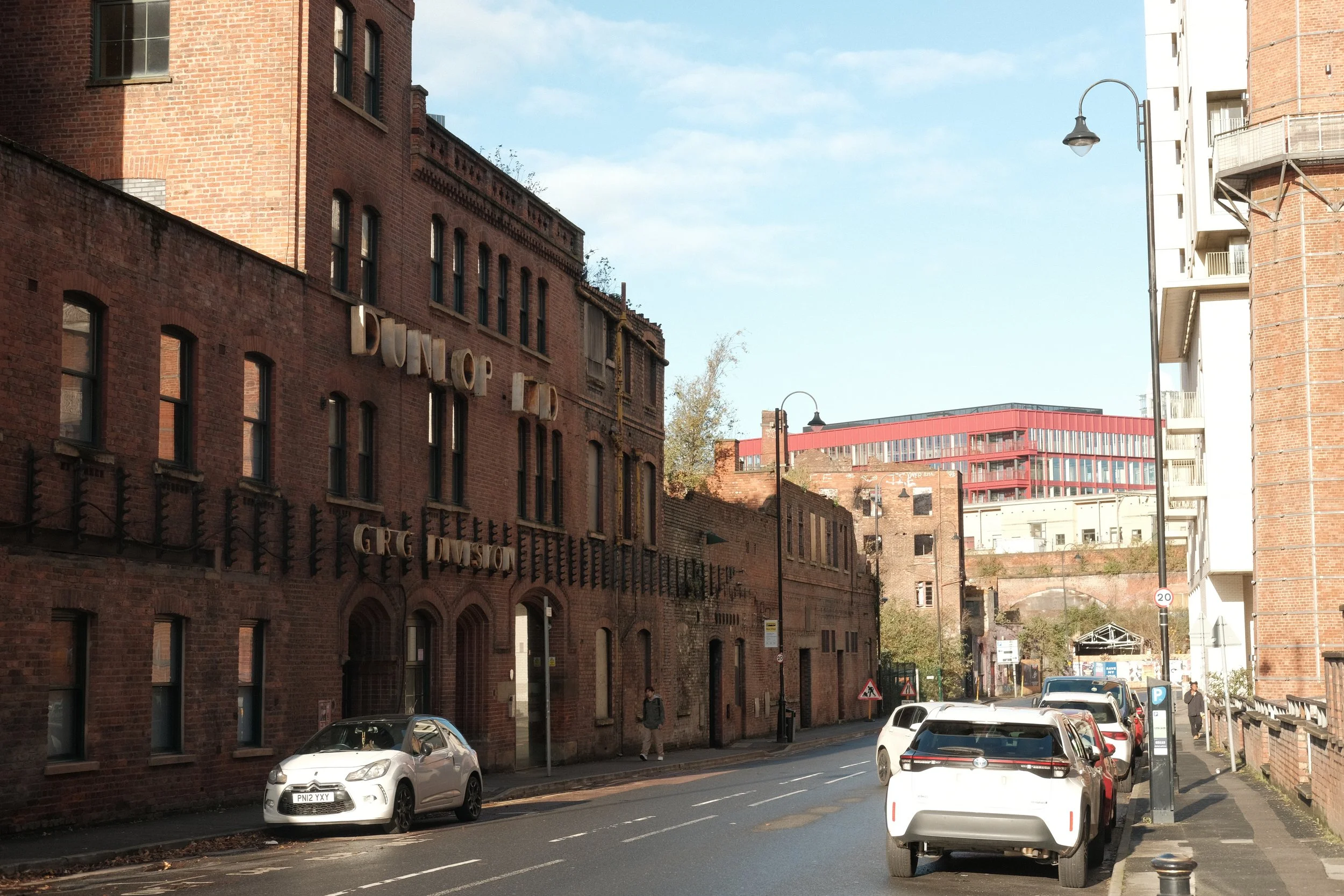
CAMBRIDGE STREET, MANCHESTER
In the context of ongoing redevelopment and in the wake of a devastating fire we prepared an arts and interpretation strategy for this characterful neighbourhood in central Manchester, rooted in the hidden stories of the people and the river that shaped it.
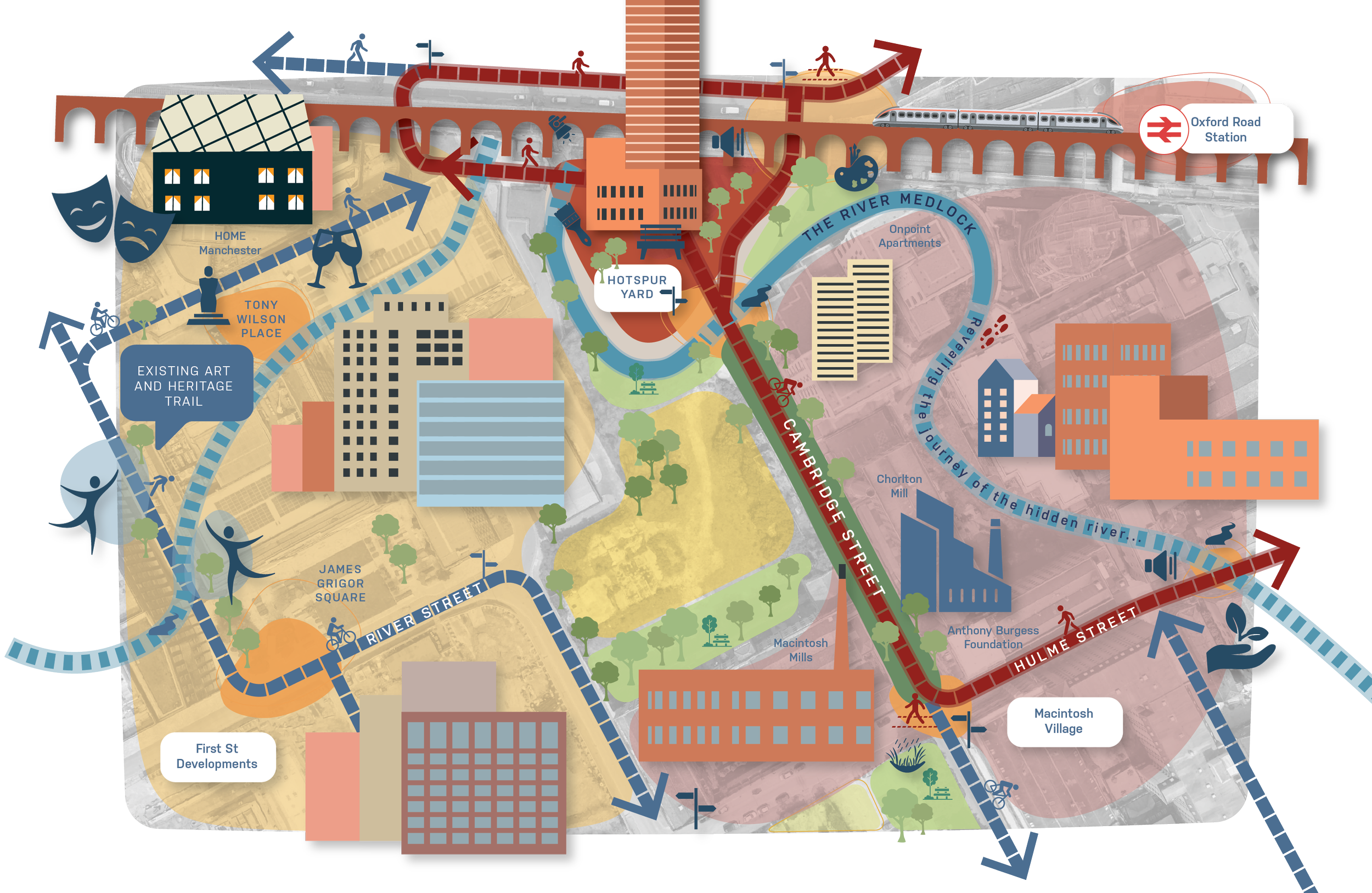
Neighbourhood strategy diagram for Cambridge Street - linking through to First Street and the Oxford Road Corridor
We were asked to develop a Public Art and Interpretation Strategy for the Cambridge Street area of Manchester, triggered by the recent devastating fire and the ongoing proposals for redevelopment of Hotspur Yard.
Our role was to set out a framework of themes and proposals for arts and heritage interventions within the new public realm that could preserve and celebrate the history of an area undergoing dramatic change.
Our starting point was the place itself: its layered history, the community of people who worked within it, and the hidden natural asset running alongside it.
Three converging themes emerged to anchor the proposals:
Arts and Culture — drawing on the building's decades as a hub for creative production, from the printed page to artist studios, to shape the look, feel and material palette of the new public realm.
Industrial History and Stories — celebrating the built heritage of the surrounding conservation area, and unearthing the forgotten human stories associated with the site. Among them, Lily Maxwell — Britain's first female voter, a working-class shopkeeper from the neighbouring streets whose story has largely been lost to history.
The Hidden River Medlock — the river that once powered the mill now flows largely beneath the street network. Its history, from pastoral meadow stream to polluted industrial artery, is one of Manchester's most overlooked narratives and one ripe for reinterpretation.
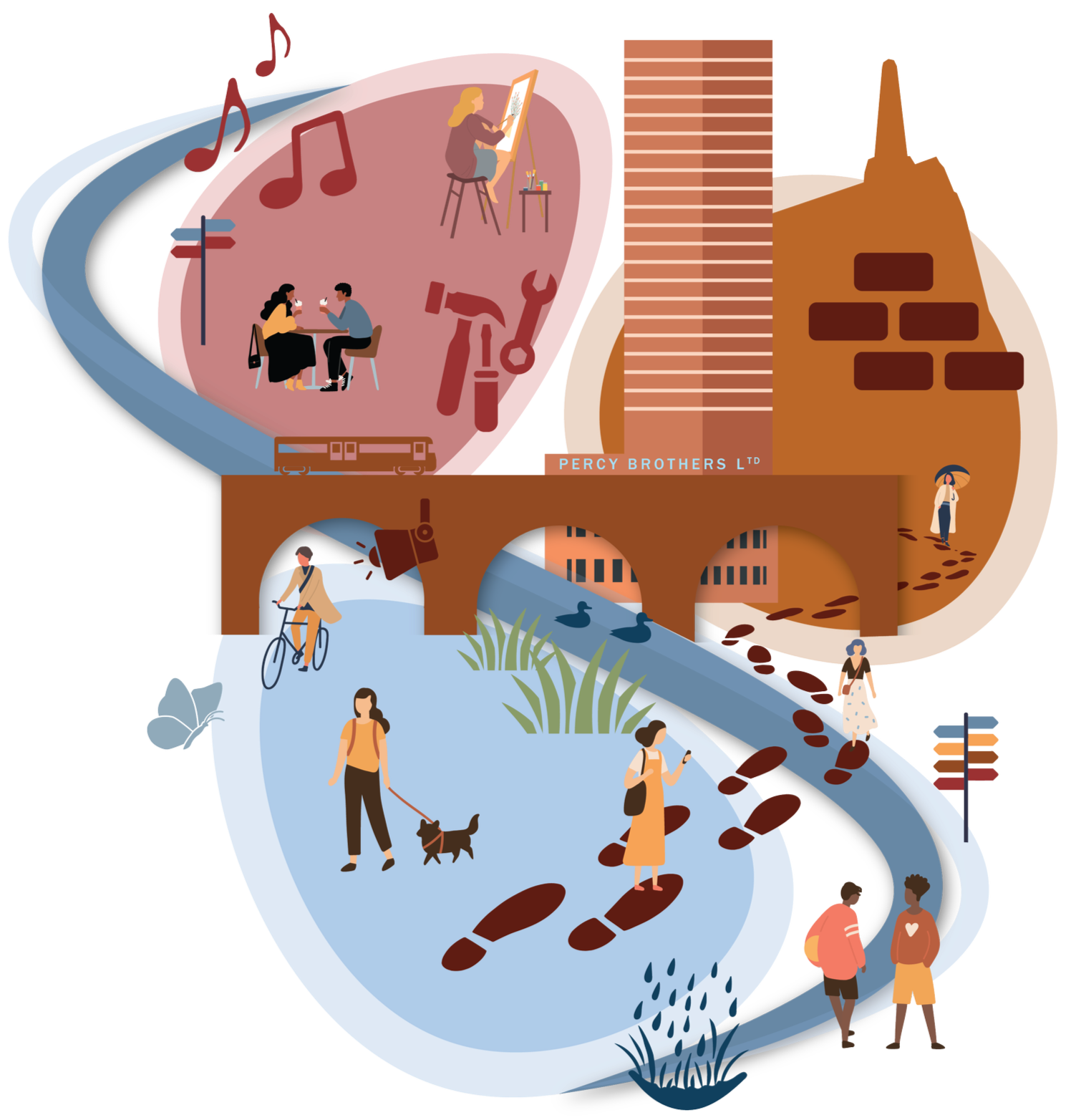
Diagram illustrating three key themes which inform the proposed arts and heritage interventions
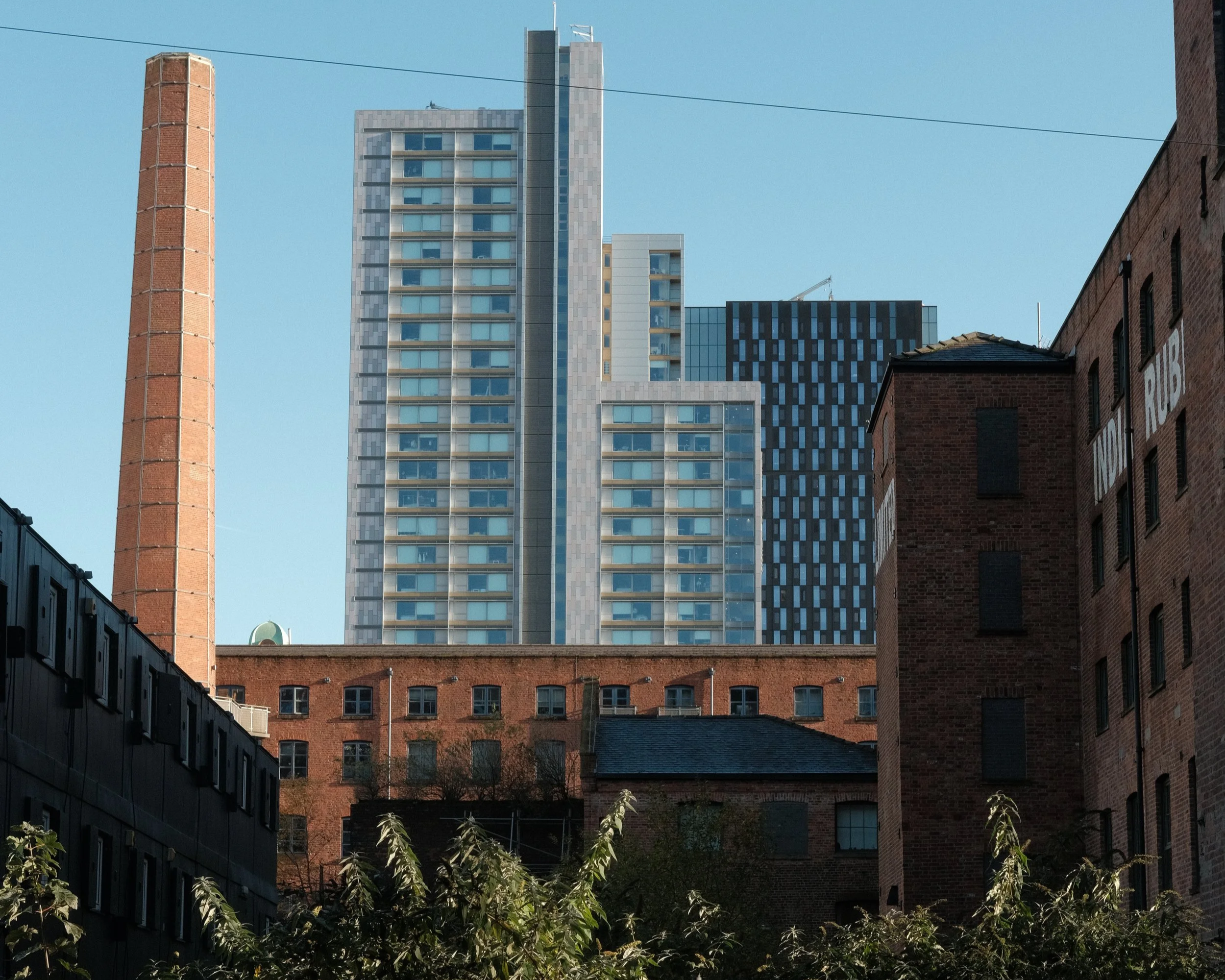
View into the Cambridge Street area highlighting the waves of change and varied character.
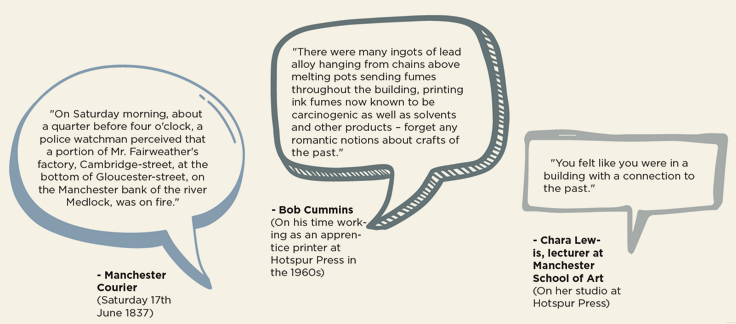
The proposals translate these themes into a layered set of interventions across the public realm:
Metalwork inlays and floor etchings — referencing the printing plate heritage of the Hotspur Press, with typefaces and historical imagery etched into paving and furniture to create an interpretive trail through the site.
Street furniture and wayfinding — laser-cut corten steel carrying patterns drawn from the River Medlock, the weaving and printing processes, and the typography of original Percy Brothers advertisements. Wayfinding columns reference the iconic blue of the original Hotspur Press lettering.
Murals — a programme of community-led artwork celebrating the stories of the site, including figures such as Lily Maxwell, whose connection to the Chorlton-upon-Medlock area and the suffragist movement makes her an important and underrepresented voice in the local narrative.
Site activation — light projections onto facades and the neighbouring railway viaduct, augmented reality trails bringing historical characters to life, QR code links to wider city heritage initiatives, and space for pop-up performance connected to nearby venues including HOME.
Salvaged materials — where possible, reclaimed bricks and ironwork from the fire-damaged building are proposed to be reused within the public realm as gabion planters, seating, and structural features — keeping a physical trace of the original mill on site.
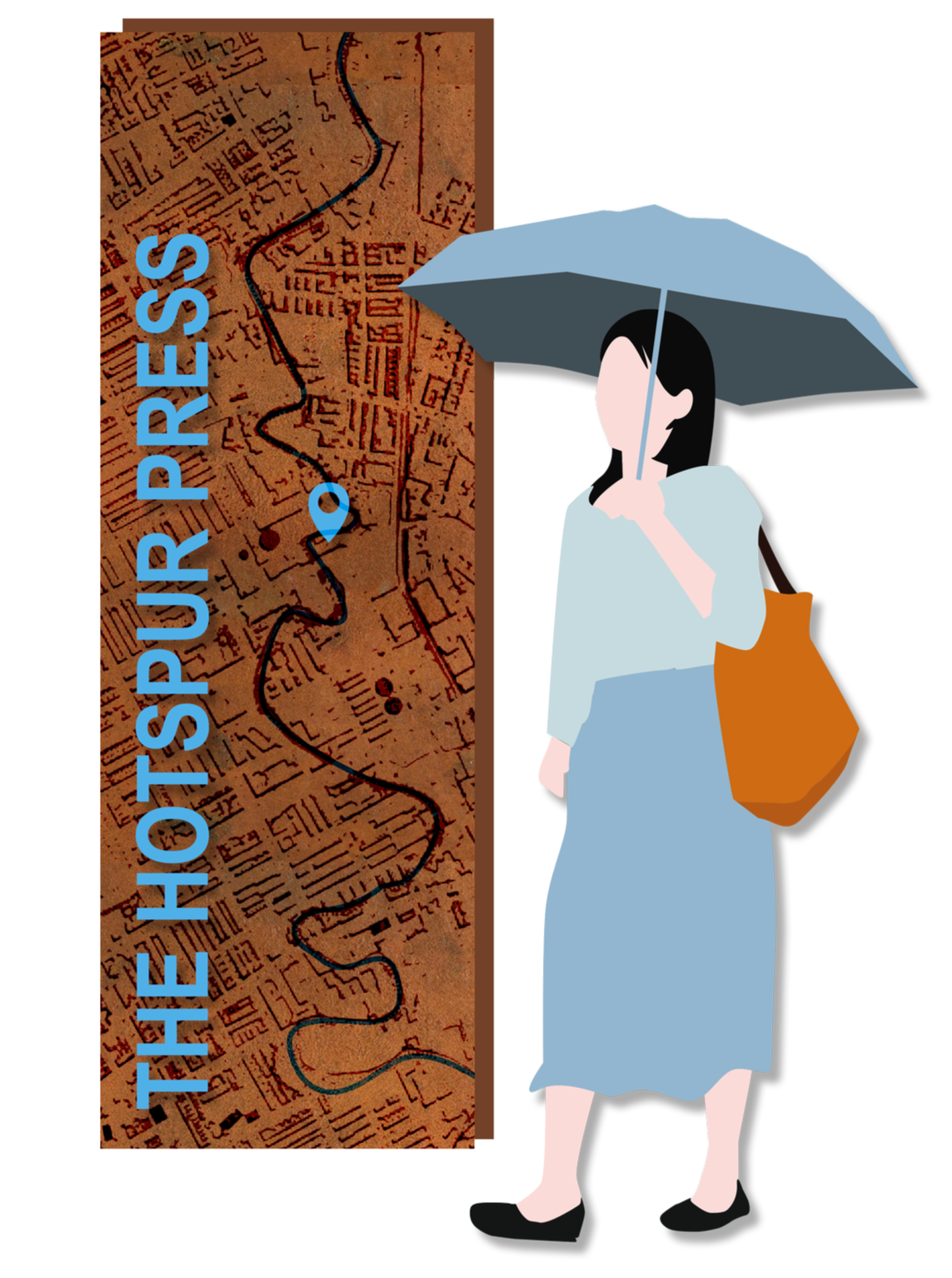
Vignette illustrating potential wayfinding interventions inspired by the site heritage
A selection of images showing the diverse character of the area
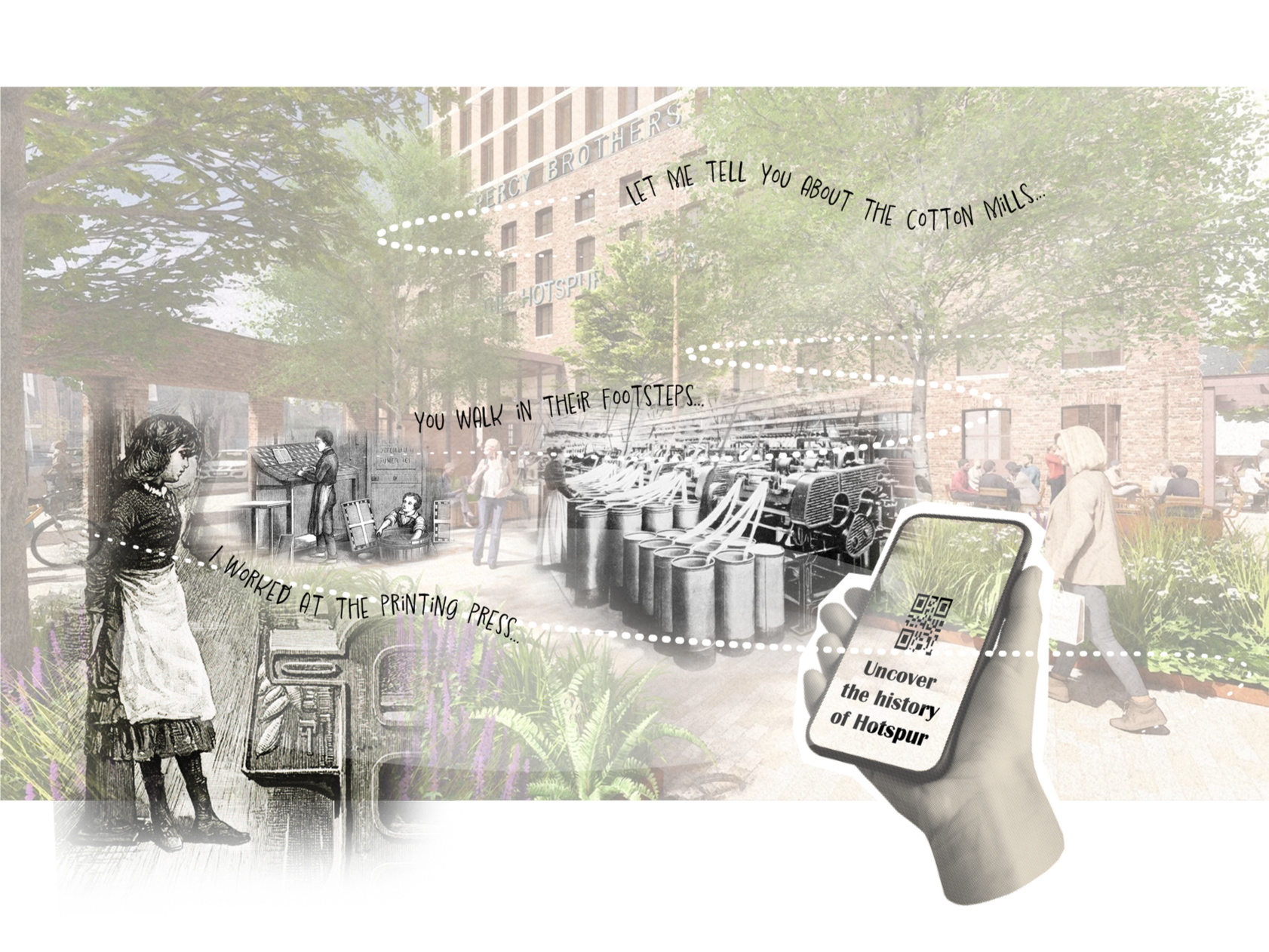
Illustration of potential virtual interpretation tools to bring the varied history of the area to life
Client: Manner
Services: Landscape Architecture, Graphic Design
Collaborators: Social, Turley
You can go back to our project work here